Businesses, schools and local services often need sound barriers to meet state and local noise standards. The choices are varied with noise systems made of:
- Concrete
- Steel
- Acrylic and other materials
All of these items fall into one of two categories, noise reflection and sound absorption barriers. Reflective materials simply send the sound in another direction, where absorbing barriers get rid of the noise.
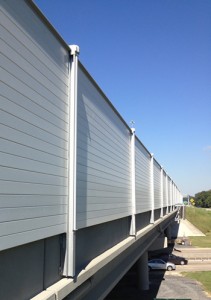
Noise absorbing walls eliminate the chance of reverberation between parallel barriers like those seen on each side of highways.
Experts have found that reflective highway barriers can actually create additional or unpredicted noise because the noise bounces back and forth between reflective noise barriers until it goes over the top and into the neighborhood.
Steel Noise Barrier Solutions Are Often Ineffective
Using metal requires a dense wall that is pliable while still maintaining a seamless design. One benefit of steel is that it can be crimped, bent, cut, and attached in many ways to meet the needs of the job.
The bad part about using steel in this fashion is that it can deteriorate and rust over time. Non-absorptive metal barriers have another flaw beyond lifespan; they can cause the sound to reflect into areas in an unexpected and unpredictable manner.
This can create unhappy neighbors and potential conflicts with any community noise standards, and even more problems than it solves in some cases.
A Sound Absorbing Barriers Eliminates Noise Instead of Reflecting
Sound absorbing panels like the ones created by Sound Fighter® Systems are an excellent option for
- Highways
- Schools
- Industrial Complexes
- Commercial Buildings
And other noise sources that exceed acceptable noise levels.
This kind of sound barriers is created to terminate the noise instead of reflecting it in a different direction.
There are many benefits of using absorptive panels including very good overall noise reduction, ease of installation, and outstanding lifespan; and freestanding portable options are available also.
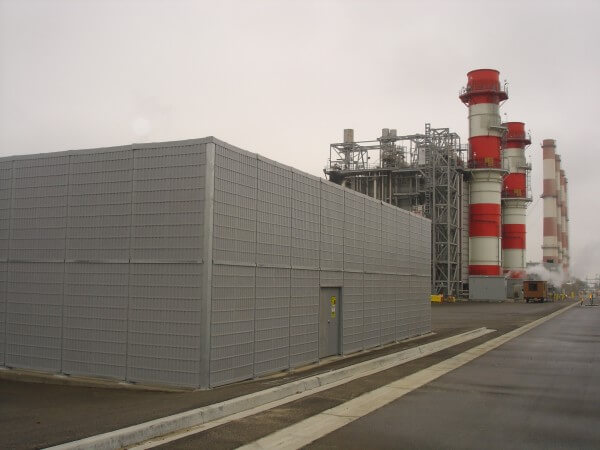
Absorptive Sound Barriers Offer More Benefits Than Metal Sound Walls
Businesses, school districts, airports, companies with large docking areas, warehouses, manufacturing plants, and places where traffic noise is a problem can significantly benefit from the use of sound absorbing walls like the ones created by Sound Fighter® Systems.
Every panel is 100 percent made in the United States. Another benefit is that the fiberglass wall panels are constructed with a combination of recycled and recyclable materials.

Leave a Reply