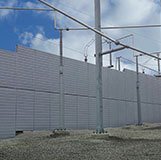
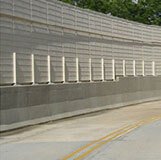
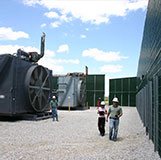
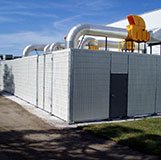
Selecting the appropriate sound barrier for your building's Heating, … Read More »
Over 45 Years of
Industry Experience
For nearly five decades, Sound Fighter® Systems (SFS) has been a pioneer via innovative services and products, including fully sound-absorptive, high-performance, outdoor sound barriers. With an ever-broadening product line, professionals from many different industries and applications recognize the solutions offered by Sound Fighter® exceed expectations time and again, upholding a trusted reputation that has lasted for more than 45 years.
View More »
Noise Applications
View More »
Technology
Our proprietary sound-absorbing products are the go-to noise reduction tools of Acoustical Engineers & Consultants, Departments of Transportation, Developers, Architects, Oil & Gas Companies, Manufacturers, and Contractors around the world.
If you are in need of a proven, highly-effective products, ours have no equal. Contact Sound Fighter® and we will help you resolve your noise problems quickly and effectively.
Learn More »Benefits of our Absorptive Sound Barrier Walls

What’s so special about our absorptive noise barrier walls? It’s difficult to find other products that reduce noise as effectively (on average 15 – 20 decibels), are competitively priced against other top-performing outdoor acoustical products, and last for decades before they need major repair or replacing.
In addition to being effective, our noise barrier walls can be modified to meet the custom requirements of a number of different applications. We provide commercial noise barrier solutions. We can modify your custom sound walls to include:
- Doors for personnel to enter and exit
- Swing gates to allow access for vehicles
- Acoustic louvers that allow airflow to important equipment
- The ability to mount on existing walls
- Wide selection of standard colors, as well as custom color-match
- Special cutouts that allow piping or conduit to pass through
- Mobile deployment for situations where you need temporary solutions
Our Sound Barriers Successfully Reduce Noise Levels
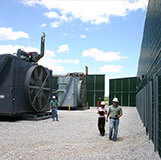 When you think of noise barrier walls, you typically picture the large walls running between subdivisions and apartments and busy highways. But, these sound walls actually work successfully in a number of different applications.
Regardless of the reason you need to reduce noise, Sound Fighter® Systems possesses the ability to help you get the job done with our sound walls. We’ve helped a variety of clients reduce noise levels per their specific requests with our various noise-absorbing sound barrier wall, including clients in the following situations:
- A pipeline company with a noisy compressor station near a residential area
- A high-end commercial developer needing to block noise from nearby residences
- A Florida transit authority increasing traffic near a high-end residential neighborhood
- A large west coast Public Works Department needed to reduce noise in a natural gas transmission facility affecting its own buildings nearby
Regardless of the type of noise barrier wall you need or the occasion for which you need it, Sound Fighter® Systems has the ability to provide you with an effective solution.
Latest News
Testimonials

Jason Travinsky, President, Versatile Construction
“These projects are all individually designed by SFS which eliminates guesswork, thus saving time and money ...

Daniel Sharp, Project Manager, DUKE ENERGY
Solar Farm Project in Florida -- “Sound Fighter Systems provided design and engineering for a one hundred foot ...
